

Welcome to Vantage Explorations’ Barcelona to Valletta: Storied Shores of the Mediterranean
Following ancient trade routes, we sail the islands of the western Mediterranean like stepping stones, calling at storied shores and natural harbours that for centuries welcomed merchants, pilgrims, adventurers, and mariners in search of safe anchorages and new opportunities.
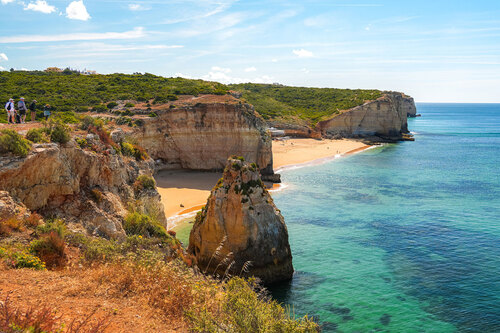
Along the way, we'll discover islands and coastal towns shaped by their strategic place at these maritime crossroads. From the British-influenced streets of Menorca and the scenic coves of Sardinia's Costa Smeralda to the cliff top citadel of Bonifacio, the archaeological site of Pompeii, and the mythical islands of Capri and Sicily, each destination reveals a chapter in the Mediterranean's deeply interconnected past.
Rich in culture, layered history, and enduring traditions, this journey invites us to experience this sea as generations of travellers once did, moving from island to island and harbour to harbour along the great coastal highway that connected the storied shores of the Mediterranean.
Arrive at Barcelona El Prat Josep Tarradellas Airport and transfer to our Embarkation Suite (conditions apply below). Explore Barcelona at your leisure before returning to our Embarkation Suite at the designated times for the group transfer to Douglas Mawson.
Important information:
- Complimentary airport arrival transfers are provided as group transfers for expeditioners arriving at Barcelona El Prat Josep Tarradellas Airport prior to 12:00pm on Day 1 only.
- Passengers who arrive after the airport transfer cut-off will need to make their own way to the Embarkation Suite before 2:00 pm to complete mandatory check-in.
- For passengers already in Barcelona, we ask you to visit our centrally located Embarkation Suite with all luggage, which will be open for mandatory check-in between 9:00 am and 2:00 pm.
- Passengers have access to our centrally located Embarkation Suite, including luggage storage, Vantage Explorations staff for voyage and city information and cabin check-in, WIFI, tea, coffee and light refreshments. Embarkation Suite location: to be advised closer to date of departure.
- As your luggage will be transported to the ship at 2.30pm and ahead of you, please ensure you place any items you require during the day in your day bag, including passports, cash/cards and medicines.
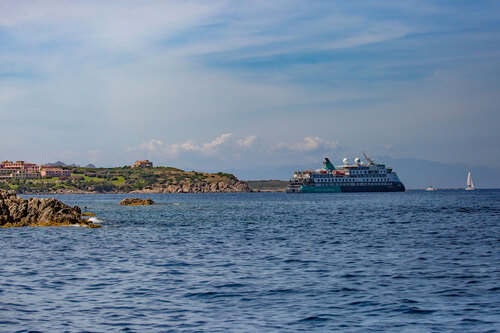
In the late afternoon join a mandatory group transfer to board the Douglas Mawson. After boarding, there’s time to settle into your cabin before our important safety briefings before we ‘throw the lines’ to begin our voyage.
This evening, join your fellow travellers for an onboard Welcome Dinner, where your expedition team will introduce you to the expedition ahead and raise a toast to the adventures to come.
Meals: Dinner onboard
The heart of this easternmost Balearic island beats to its own rhythm, unhurried and distinctly its own. Unlike neighbouring Mallorca, Menorca is defined by its tranquillity. Rather than nightlife, you’ll encounter a rich tradition of craftsmanship, from costume jewellery and leatherwork to dairy farming and the island’s distinctive horse culture.
Ending in 1802, centuries of British rule left their mark, evident not only in elements of the architecture but in the island’s enduring taste for gin, first produced here in the Mediterranean under British influence.
Our voyage from Menorca to the Coriscan coast offers an interesting interlude, during which our host and onboard team introduce you to the fascinating cultures and histories of the destinations ahead through engaging presentations.
A day at sea affords you the opportunity to explore the ship’s amenities. Whether you choose to invigorate yourself in the gym, relax in the library, or enjoy panoramic views from the observation lounge, there is something for everyone to enjoy.
The undisputed capital of what is referred to as the Costa Smeralda is Porto Cervo caters for a discerning clientele, with celebrities, the rich and famous and super yachts all common place. We mingle with the owners of million-euro yachts and the international jet set who were encouraged to visit Porto Cervo by none other than Prince Karim Aga Khan IV. The Imām of the Nizari Ismāʿīli Shias purchased the land here in the 1960s and invited French architect Couëlle to add a little ‘joie de vivre’ to the place, a spark that remains to this day.
Today, Porto Cervo remains a playground for the rich and famous. Spend your morning strolling along the marina, where you can admire luxurious superyachts, or simply bask in the sun at a seafront bar while soaking up the exclusive atmosphere. Whether you’re exploring the waterfront or savouring the town’s upscale charm, Porto Cervo offers a taste of refined luxury and exclusivity found in few other Mediterranean ports.
We Zodiac to shore to meet out 30-minute road transfer to the coastal town of Palau, where we exchange the comfort of our ship for the coves and bays of northern Sardinia, boarding mid-sized boats to explore the Maddalena Archipelago, a protected cluster of islands known for its clear turquoise seas, and sculpted granite landscapes. Scattered across these waters, the islands are a haven of coves and bays.
Cruising between them, we pause to swim and snorkel straight from the boat in some of the Mediterranean’s clearest waters, where the visibility often reveals colourful fish darting between the rocks below. If we are fortunate, we may even encounter local pods of bottlenose dolphins, occasionally seen gliding through these waters.
With time to relax, take in the scenery, and simply enjoy the moment, this is a day shaped by Sardinia’s natural beauty, best experienced from the sea.
Although Napleon Bonaparte left Corsica for military college before he turned ten, he famously declared that to know Corsica ‘is to be born there’ making Corsica a legendary land. An island of vertical limestone cliffs and craggy bays, Corsica is a slice of France with a twist. Passed between the powers of Pisa, Genoa, and France, even its language is a combination of Italian, spoken in a Tuscan dialect, and Latin. Corsica’s strategic location has it firmly within the realms of trade, and few of its towns were as commercially important as Bonifacio, located at its southern tip.
Rising high above the sea, all but sculptured limestone cliffs of Bonifacio are among the most dramatic in the Mediterranean, and there is no better way to experience them than on foot. Following a 5-6 kilometres one-way section of the Stradavecia Path, we trace the old route linking the harbour to the heights above, revealing the town from a constantly shifting perspective.
The path winds through low Mediterranean vegetation and along the cliff edge, with sweeping views over the marina and out across the Strait towards Sardinia. As we ascend towards La Madonetta lighthouse, Bonifacio unfolds below; its harbour, citadel, and sheer cliffs coming into full view, offering a striking sense of place shaped by both landscape and history.
Your afternoon is free to relax onboard or explore Bonifacio's citadel or old town, where views open unexpectedly across the Strait of Bonifacio, with Sardinia visible on the horizon. As you wander past ancient churches, weathered façades, and quiet squares, you’ll gain a sense of daily life in Corsica’s most picturesque town. Alternatively, return to the marina and enjoy the waterfront atmosphere before the ship sails in the early evening.
Boarding our Zodiacs, we transfer ashore and transfer to smaller craft to explore Golfo Aranci one of Sardinia's most beautiful harbours. Sheltered by the dramatic limestone heights of Capo Figari and looking out towards the islands of Figarolo and Tavolara, these crystal-clear waters are renowned for their rich marine life.
One of the highlights of spending time in the bay is the possibility of encountering the area's resident population of bottlenose dolphins. The waters around Figarolo Island are among the best places in Sardinia for dolphin sightings, and these intelligent and playful creatures are often seen feeding, socialising and riding the bow waves of passing boats. While nature never offers guarantees, the opportunity to observe dolphins in their natural environment adds a special dimension to our exploration.
As we cruise through the bay, you’ll see Capo Figari, a rugged promontory rising steeply from the sea, and pass the shores of Figarolo Island and several of the area's beautiful beaches, including Cala Moresca and Spiaggia Bianca. Time and sea conditions permitting, there may be an opportunity to pause for a short swim in one of the bay inlets before returning to the ship.
Back on board, we enjoy lunch as the ship sails east towards the enchanting Isle of Capri.
We sail into the Bay of Naples to the legendary island of Capri. A duel-crested island rising from the sea as a mythical creature, Capri has attracted tourists since ancient times. Rome’s notorious emperors built no less than 12 villas here, declaring it by edict to be an imperial retreat.
Arriving by tender in a traditional open boat, we come ashore at Capri’s Marina Grande, where a short funicular ride carries us up to Capri Town (the Piazzetta) to begin your preferred ‘Your Choice’ experience.
At the conclusion of your experience, linger in Capri town (time dependent) and make your way back down to Marina Grande to meet our tender service for your journey back to the ship.
Back onboard, we enjoy the sea views for which the island is famous before literally sailing into the sunset as we follow the coastline of the stunning Amalfi Coast to Salerno.
Personalise your exploration with our included ‘Your Choice’ experiences.
Option 1 – Afternoon experience: Augustus Gardens
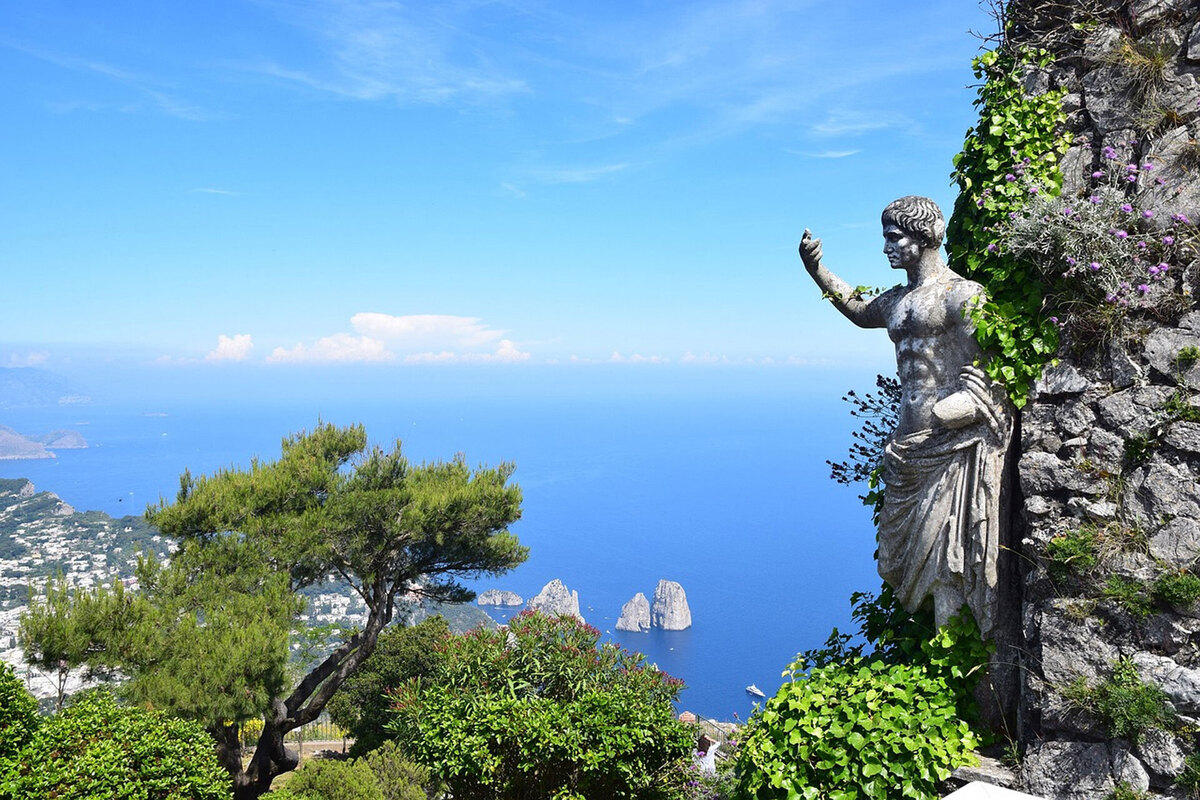
From Capri town, a 10-minute walk finds us at the famed Augustus Gardens. Offering sweeping views over Capri’s dramatic coastline, with terraces planted in vibrant Mediterranean blooms, and sculptures suggesting an ancient imperial beginning reflecting their name, the Augustus Gardens were created for early 20th century German industrialist Alfred Krupp, to reflect a more refined side of island life, where he spent his summers in relative seclusion, enjoying both privacy and privilege.
Option 2 – Afternoon experience: Walk the Pizzolungo
Starting in Capri Town, the 3–4 kilometres Pizzolungo loop offers one of the island’s most scenic coastal walks, tracing the eastern ridge before returning to the heart of town. Winding past the 18-metre-high rock formation known as the Natural Arch, the path follows the island’s dramatic clifftops, revealing uninterrupted views of the Faraglioni and Capri’s rugged shoreline. Along the way, glimpses of hidden villas and quiet coves evoke a sense of Capri’s timeless dolce vita. With its mix of shaded paths, open vistas, and ever-changing scenery, the Pizzolungo provides a relaxed yet immersive way to experience the island’s celebrated landscapes and sweeping sea views.
The port of Salerno provides access this morning to one of the world’s most renowned UNESCO World Heritage sites, a powerful testament to nature’s force: Pompeii. Join our locally guided tour or explore the ruins at your own pace before returning to Salerno to sail south for Sicily in the early afternoon.
Known to the Neapolitans simply as ‘him,’ Mount Vesuvius towers over the surrounding fertile plains at 13,779 feet (4,200 metres). ‘He’ has been quiet of late, but it was a different story in 79 BCE, when ash and rocks hurled ten miles high and lava vomited forth engulfing the cities of Pompeii and its seaside sister, Herculaneum. Albeit a tragedy, the excavation of this extensive site reveals evidence of the city’s final dramatic moments, preserved forever by the volcanic ash. At Pompeii, every relic speaks louder than words. The bones of a wealthy trader clutching the keys to his chest of profits, wine goblets and freshly baked bread sitting on tables ready to be consumed, the body of a wealthy woman sleeping suspiciously in a gladiator’s quarters. From the rich to the poor, senator to slave, no class was spared the devastation.
Time spent amongst the ruins of Pompeii affords visitors a personal insight into both the life and death of the city’s inhabitants, while every relic reveals a yet to be discovered story at every corner, whether it’s your first visit or you’re a seasoned ‘Roman ruin’ aficionado. Centuries after its destruction, Pompeii continues to tell a tale of intrigue, returned to life by the ruins and remains, of this archaeological wonder.
Set against the dramatic backdrop of Mount Etna’s ancient lava fields, Catania is a city that has endured its 2,800 years, against all odds. A key strategic location during the Allied liberation of Sicily, the city was heavily bombed in World War II with many residents seeking refuge below ground in caves, cellars, and hidden spaces, drawing on the very layers that define the city today. Yet, despite conflict and its precarious position at the foot of Europe’s most active volcano, Catania survived and rebuilt with characteristic energy.
Repeatedly reshaped by eruptions and earthquakes, its baroque streets, lively piazzas, and volcanic stone architecture reflect a history shaped by both natural forces and human endeavour, making it a compelling introduction to Sicily’s enduring spirit.
Our ‘Your Choice’ experiences today offer either an insight into Catania’s hidden history, or a glimpse into the decadent lifestyle of the Roman Empire’s rich and powerful. For those choosing our morning experience, we end our walk at Cathedral Square, home to one of Italy’s most atmospheric markets; La Pescheria. While renowned for its lively fish market, the surrounding stalls offer far more, with colourful displays of seasonal produce, cheeses, and Sicilian specialities. It’s a wonderfully authentic setting in which to soak up the city’s energy, wander at your leisure, or pause to enjoy a refreshment. Note: some market stalls will start to close around 1:00 – 2:00pm.
There’s time to explore the city further this afternoon at your own pace, with a shuttle provided to return you to the ship before we sail south in the early evening.
Personalise your exploration with our included ‘Your Choice’ experiences.
Option 1 – Morning experience: Hidden Catania
This locally guided experience invites you to explore Catania through the lens of the city’s past, revealed as we move between the modern city above and the hidden layers beneath. Flourishing under Roman rule, Catania became an influential provincial centre, its wealth showcased through grand theatres, bathhouses, and public spaces.
Today, much of Roman Catania lies buried, concealed beneath centuries of Mount Etna’s lava flows and successive rebuilding. As we weave our way between street level and subterranean spaces, we uncover these remarkable remains, from theatres and bath complexes to fragments woven into the fabric of churches and palaces, offering a striking insight into a city built upon its own history.
This is not simply a tour of ruins, but a journey through time, where ancient life endures mere metres below the vibrant streets of present-day Catania.
Option 2: Full day experience: Piazza Armerina’s Villa Romana del Casale
Built at the peak of Rome’s influence over Sicily, an hour and a half drive inland from Catania, the decadently designed Roman villa, the Villa Romana del Casale offers a rare and vivid insight into the lifestyle of the Roman Empire’s rich and powerful. From private apartments and tranquil courtyards to spaces dedicated to sport, leisure, and indulgent health and beauty rituals, the villa reveals how the elite once spent their time.
The story of its residents unfolds through the extraordinarily well-preserved artwork that fills the villa, believed to be the largest collection of Roman mosaics in the world. Spanning over 3,000 square metres, these vibrantly coloured and intricately detailed mosaics depict scenes of myth, heroics, gods, and everyday life, bringing the ancient world strikingly to life. Away from the tourist-crowds we walk through its rooms and gardens, stepping into the lives of those who once called it home, becoming acquainted with them through the art, objects, and personal touches that enhanced their remarkable lives. It is a rare and immersive glimpse into a life lived more than 1,700 years ago, and one not to be missed.
Our small ship status affords us a privileged berth today, just a short walk from Syracuse’s enchanting island of Ortigia. Renowned as a true ‘food lover’s’ destination, we join our local guides for a morning stroll through its historic streets, where the vibrant market scene brings the island to life.
At its heart, the street market is a celebration of Sicilian flavour with stalls brimming with fresh seafood, alongside locally sourced produce, fragrant herbs, and spices integral to local cuisine. The hustle and bustle are unmistakably Sicilian with the rhythm of daily life unfolding around us, while clustered among the stalls, streetside restaurants and small local eateries invite us to pause and sample the island’s flavours in their most authentic setting.
Choose to linger a little longer over lunch or join us for an exploration of Syracuse’s UNESCO World Heritage Site: the Parco Archeologico della Neapolis. Here, our local guides bring ancient worlds to life as we explore the vast 16,000-seat Greek Theatre and the 2nd century Roman Amphitheatre, once the stage for gladiatorial contests and public spectacles.
From here, the landscape shifts as we step into the limestone quarries that provided the very stone used to build the city around us. It was here that following Syracuse’s defeat of Athens in the 5th century BC, thousands of prisoners were held here, transforming this place of industry into one marked by hardship and endurance. Within these quiet, shaded spaces, the rock opens into a series of vast chambers, including the Ear of Dionysius, a 23 metre high, curved cave known for its remarkable acoustics, bringing together the many layers of Syracuse’s past in one striking setting.
We sail in the early evening to Malta, with a treat in store onboard – a farewell dinner fit for a Sicilian.
After breakfast onboard, disembark and transfer to the airport for your onward flight.
Meals: Breakfast