

Welcome to Vantage Explorations’: The Mediterranean: Beyond the Icons
Sailing the Mediterranean's quieter shores this voyage takes us to places beyond the familiar travel circuit, where history, culture and landscape combine to reward the well-travelled with discoveries away from the everyday.
In the wake of former empires, we follow a lesser-travelled route across the Mediterranean, tracing the tides of trade, conquest and cultural exchange that have shaped this remarkable region. From the golden-hewed temples of Agrigento to the whitewashed Kasbah of Tangier. From Palermo's vibrant Ballarò market to the fortress of the Spanish enclave of Melilla, and from the dramatic cliffs of Sardinia to the sea-carved coves of Portugal, each destination reveals a further layer of the Mediterranean story. Designed for curious travellers, this voyage seeks out the stories behind the places and faces. Stories that illuminate their past, deepen our understanding of their present, and offer insights into their future.
Arrive at Malta International Airport and transfer to our Embarkation Suite (conditions apply below). Explore Valletta at your leisure before returning to our Embarkation Suite at the designated times for the group transfer to Douglas Mawson.
Important information:
- Complimentary airport arrival transfers are provided as group transfers for expeditioners arriving at Malta International Airport prior to 12:00pm on Day 1 only.
- Passengers who arrive after the airport transfer cut-off will need to make their own way to the Embarkation Suite before 2:00 pm to complete mandatory check-in.
- For passengers already in Valletta, we ask you to visit our centrally located Embarkation Suite with all luggage, which will be open for mandatory check-in between 9:00 am and 2:00 pm.
- Passengers have access to our centrally located Embarkation Suite, including luggage storage, Vantage Explorations staff for voyage and city information and cabin check-in, WIFI, tea, coffee and light refreshments. Embarkation Suite location: to be advised closer to date of departure.
- As your luggage will be transported to the ship at 2.30pm and ahead of you, please ensure you place any items you require during the day in your day bag, including passports, cash/cards and medicines.
In the late afternoon join a mandatory group transfer to board the Douglas Mawson. After boarding, there’s time to settle into your cabin before our important safety briefings before we ‘throw the lines’ to begin our voyage.
This evening, join your fellow travellers for an onboard Welcome Dinner, where your expedition team will introduce you to the expedition ahead and raise a toast to the adventures to come.
Meals: Dinner onboard
Sailing towards Sicily's southern shores, we arrive at Porto Empedocle, a gateway to one of the island's most remarkable treasures. Our ‘Your Choice’ experiences offer a choice of two engaging options this morning. Choose to join a guided tour of the Valley of the Temples, where you will explore the rich history and fascinating lifestyles of Sicily’s ancient residents or head inland to a family-owned winery to discover the centuries-old significance of wine production on the island.
Personalise your exploration with our included ‘Your Choice’ experiences.
Option 1 - Morning experience: Agrigento – The Valley of the Temples
Just a short distance inland lies Agrigento's ‘Valley of the Temples’. Recognised as a UNESCO World Heritage Site, Agrigento remains one of Sicily's most compelling destinations, a place where myth, history and landscape combine to create an unforgettable encounter with the ancient Mediterranean world.
Founded as the Greek colony of Akragas in the 6th century BCE, Agrigento grew into one of the wealthiest and most influential cities of the ancient world. Blessed with fertile farmland and strategically positioned along important Mediterranean trade routes, the city flourished, attracting philosophers, artists and merchants.
Today, its extraordinary archaeological landscape brings to life the stories of the people who lived, loved and died here more than 2,500 years ago. Set along a ridge overlooking the Sicilian countryside, the Valley of the Temples is home to a series of well- preserved Doric temples, including the Temple of Concordia, widely regarded as one of the best-preserved Greek temples in the world, as well as the monumental remains of the Temples of Juno, Heracles and Olympian Zeus.
Option 2 - Morning experience: Sicilian Wine Tasting
The Southern Sicilian countryside is scattered with wineries owned and operated by families. Inland from Port Empedocle, surrounded by lush olive and almond groves with wheat fields stretching around them, each winery benefits from Sicily’s unique soil, which is enriched by volcanic ash and Mediterranean minerals. Wine has long been a cornerstone of Sicily’s economy, dating back to ancient times when the island was a major wine producer for the Roman Empire. During your visit, you will tour the winery and learn about traditional winemaking methods that have evolved over the centuries. Following the tour, enjoy a tasting session that features wines paired with local snacks that highlight regional flavours. This experience offers a genuine taste of Sicily’s vinous heritage and provides insight into the island’s deep-rooted winemaking culture, all while soaking in the natural beauty of the region.
This afternoon, we’ll cruise Sicily's western shores before rounding the island's rugged western extremity to its storied capital: Palermo.
Once infamous as a base for the Sicilian Mafia, Sicily’s capital, Palermo, now proudly claims to be ‘a clean city,' offering travellers the chance to enjoy its ancient sites, colourful markets, and vibrant Sicilian lifestyle once more. Steeped in history, culture and Mediterranean charm, Palermo’s strategic location at the crossroads of civilisations has seen it influenced by Greek, Roman, Arab, Norman and Spanish cultures, making it a fascinating city to explore.
Enjoy your preferred ‘Your Choice’ experience this morning with the afternoon at your leisure, offering time to further explore Palermo independently before we depart for Sardinia in the early evening.
Personalise your exploration with our included ‘Your Choice’ experiences
Option 1 - Morning experience: Mysterious Palermo
Morbid. Bizarre. Memorable. There are many words that can be used to describe the Catacombs of Palermo, but for many visitors there is only one: unmissable. Built in the late 16th century to house the honoured dead of Palermo, the Capuchin Catacombs evolved over the centuries into one of the world's most extraordinary burial sites. Thousands of mummified bodies line the walls, preserved in remarkable detail and dressed in the fashions of their day, offering a fascinating glimpse into Sicilian society, traditions, and attitudes towards death.
Leaving the silence of the Catacombs behind, your exploration continues on foot through the historic heart of Palermo, where power, faith and ambition shaped the city's identity for centuries. Passing the Norman Palace, Palermo Cathedral, Quattro Canti and Piazza Pretoria, you'll discover the many cultures and rulers that have left their mark on Sicily's vibrant capital.
Your local guide then leads you to the magnificent Oratory of Santa Cita, one of Palermo's artistic treasures.
Here, the theme of remembrance takes on a different form. Rather than preserving the dead, the city's powerful confraternities sought immortality through patronage, commissioning lavish religious spaces that displayed both devotion and status. The breathtaking stucco masterpieces of Giacomo Serpotta reveal how Palermo's 17th- and 18th-century elite competed to leave a lasting legacy.
The tour concludes at Vucciria, a popular market where Sicilian’s celebrate Palermo's street food. Enjoy lunch streetside or join our shuttle back to the ship.
Option 2 - Morning experience: A taste of Palermo
Following our local guide directly from the ship, we make our way to Ballarò Market, widely regarded as one of the most authentic markets in Italy. Here, amid the bustling lanes and the traditional abbanniate cries of the vendors, you'll experience a side of Palermo that has changed little over the centuries. Residents carefully inspect produce before buying, judging quality through touch, scent and freshness. Shaped by generations of ordinary people who learned to make the most of every ingredient, Sicilian food is rooted in a tradition of thrift, ingenuity and minimal waste. Along the way, we discover the story behind Siciliy’s favourite local ingredients such as sweet prickly pears, freshly harvested artichokes, seasonal citrus fruits and sun-ripened vegetables, all of which play an important role in its distinctive cuisine.
From the market, we continue to the nearby Church of the Carmine Maggiore, whose striking majolica-tiled dome rises above Ballarò's busy streets. Standing at the heart of the neighbourhood, the church has long been intertwined with the daily life of the market and its residents.
A short walk then brings us to Piazza Pretoria and Quattro Canti, the elegant crossroads at the centre of historic Palermo. Surrounded by fountains, churches and noble palaces, this is the perfect place to conclude our exploration, while we encourage you to continue discovering the city at your own pace, you’re always welcome to join our shuttle to the ship.
Enjoy a leisurely day at sea as we sail from Italy’s largest island to its second largest. This is a day made for relaxation to do as much or as little as you please. Perhaps unwind in the sauna, lounge on the Sun Deck, or find a quiet corner in one of the ship’s observation lounges. You might also discover a new favourite read in our well-stocked library, while this afternoon, you’re invited to join your master storyteller and our onboard team of Tour Managers for a range of presentations.
With a population of just 1.5 million, Sardinia is a sparsely populated, ruggedly beautiful island, where granite mountains, wild coastlines and ancient villages reflect a history shaped by both isolation and conquest. Its location has attracted numerous invasions by a list of Europeans heavyweights from the Phoenicians, Carthaginians and Roman, to Pisans, Genoese, Spaniards and, ultimately, the Kingdom of Italy.
It's no surprise that after all the successive waves of foreign rule, many Sardinians consider themselves Sardi first and Italians second. Proud of their distinct language, traditions and identity, they regard Sardinia not simply as an Italian region, but as a nation with its own unique cultural heritage and identity.
Perched on Sardinia's southern tip is the intriguing city, Cagliari, a sun-drenched Mediterranean capital overlooking the nearby Gulf of Angels, where pink flamingos rise from shimmering lagoons, the golden sands of Poetto Beach stretch along the shoreline, and the dramatic hilly headland of the Devil's Saddle stands guard over the bay.
Join our local guide this morning for a walking tour of Cagliari's historic heart, exploring the winding streets, grand piazzas and hilltop quarter that has shaped the city for centuries.
Perched high above the harbour, Castello was historically the preserve of Cagliari's ruling elite. Behind its formidable walls lived Pisan and later Aragonese governors, nobles, clergy and administrators, while merchants, sailors and labourers made their homes in the lower quarters below. Today its medieval character, historic palaces, quiet lanes and commanding views across the Gulf of Cagliari have once again made it one of the city's most desirable addresses.
As we wander through its maze of narrow streets and atmospheric piazzas, we discover a city shaped by more than 2,000 years of Mediterranean history and influenced by successive Pisan, Aragonese and Savoy rulers.
In the heart of the old quarter stands the Cathedral of Santa Maria, home to one of Cagliari's most unusual treasures: the Shrine of the Martyrs. Carved beneath the cathedral in the early 17th century, this extraordinary sanctuary was created to house the relics of hundreds of local martyrs uncovered during excavations across the city. Arranged within 179 niches cut into the rock, the relics transformed Cagliari into one of the most important pilgrimage destinations in Sardinia and remain a powerful reminder of the island's early Christian heritage.
Our walk culminates at the magnificent Bastione di Saint Remy, the city's grand limestone terrace and perhaps its most celebrated viewpoint. From here, sweeping panoramas stretch across the rooftops of Cagliari, the harbour, the surrounding lagoons and the shimmering waters of the gulf beyond.
The afternoon is yours to enjoy, with the ship sailing mid-evening. Relax in the Mediterranean sunshine, swim in the crystal-clear waters of Poetto Beach, or hike to the Devil's Saddle, where traces of Cagliari's past lie hidden both above and below ground. The choice is yours.
We Zodiac ashore at Carloforte, on the island of San Pietro. San Pietro is one of the Mediterranean's most intriguing cultural enclaves. Although it lies just off Sardinia's south-west coast, its identity is profoundly shaped by the Tabarchini, descendants of Genoese settlers who arrived in 1738 after generations spent on the Tunisian island of Tabarka. Today, the island's only town, Carloforte, retains a distinctive Ligurian character, from its laid back lifetsyle to a local dialect derived from Genoese and still spoken in daily life.
Your day is free to wander the colourful laneways known as Caruggi in the historic centre, where the island's distinctive Tabarchini culture remains very much alive today. History lovers may wish to visit Forte San Vittorio, a hulk of an eighteenth-century fortress that today houses a museum dedicated to the island's heritage, follow the surviving stretches of Carloforte's old town walls, or delve even further into the past at the Necropolis of Largo Giacomo Parodo, an underground archaeological site with evidence of settlement dating back to Punic times. Sunseekers, meanwhile, can choose from a range of beaches just a short taxi or bus ride from town, while those content to slow the pace can settle into a café on Piazza Repubblica or simply watch island life unfold along Carloforte's picturesque harbourfront.
From Carloforte we sail Sardinia's rugged west coast mid-afternoon, where sheer limestone cliffs plunge into the turquoise sea and the ghostly remains of a once-thriving mining industry cling to the rock face. For centuries, the Iglesiente region was one of Europe's richest mining districts, yielding lead, zinc and silver from a landscape riddled with shafts, tunnels and workings. Today, abandoned mines and deserted settlements lend the cliffs of Masua coastline an air of haunting grandeur. Viewed from the sea, these appear as a century-old monument to Sardinia's industrial past. Looking offshore, we may see the towering sea stack of Pan di Zucchero, one of the Mediterranean's most iconic natural landmarks, backed by the cliffs, coves and rugged landscapes of the islands south. Note: Viewing opportunities along the Masua coastline are dependent on local conditions and operational clearances in effect at the time of passage.
We sail north and join our Zodiacs to transfer ashore at the harbour town of Alghero. One of Sardinia's most captivating medieval cities, Alghero’s distinctive character reflects centuries spent at the crossroads of Italy and Spain. Wander its cobbled lanes and sunlit piazzas and you may feel as though you have strayed into Catalonia rather than Italy. Following the Aragonese conquest, much of the local population was replaced by Catalan settlers, leaving a legacy that endures. Many older residents still speak Algherese, a local Catalan dialect, while traces of Catalan Gothic architecture are woven throughout the old town, earning Alghero the affectionate nickname "Barceloneta" – Little Barcelona. There’s time after our excursions to explore Alghero further at your own pace or return to the ship for lunch and a relaxing afternoon onboard, before we sail in the early evening – west to the Mallorca.
Personalise your exploration with our included ‘Your Choice’ experiences
Option 1 - Morning experience: Cape Caccia and Neptunes Cave
We board our local boats and sail beneath the limestone cliffs of Capo Caccia to visit Neptune's Cave. Sardinia is renowned for its caves, both inland and along its coastline, created over millions of years as rainwater and the sea dissolved the island's extensive limestone bedrock, forming a remarkable landscape of caverns, sinkholes and underground passages.
Accessible directly from the sea, Neptune's Cave extends deep into the headland and contains vast chambers, forests of stalactites and stalagmites, and the tranquil waters of Lake La Marmora, one of Europe's largest underground saltwater lakes. Note: Entrance to Neptunes Cave is subject to local conditions and may require climbing 654 steps.
Option 2 - Morning experience: Alghero– A Catalan Colony
Our locally guided walking tour explores the bastions that follow the curve of the bay before passing through Porta Terra into the fortified historic centre. Here a labyrinth of narrow streets links lively squares, ancient houses and noble palazzi, while landmarks such as the Cathedral of Santa Maria and the colourful dome of San Michele bear witness to the city's Iberian heritage. Following the route of the old Aragonese towers and defensive walls, we uncover the story of a prosperous harbour town whose renowned lobster industry has supported generations of residents and contributed to its reputation as one of Sardinia's longevity hotspots. Each corner reveals another chapter in Alghero's remarkable journey from Catalan colony to modern Sardinian city.
We connect Sardinia and Mallorca with a leisurely day at sea, sailing from France’s largest island to the Balearic archipelago. This is a time to relax and enjoy the rhythm of the open water. Throughout the day, our host and onboard team will share engaging presentations on the historic trade routes which shape the cultures of these island nations. As night falls, we'll be surrounded by a night sky full of stars, just as it was for ancient mariners who once navigated these same waters by starlight.
An autonomous region of Spain, the economy of the Balearic Islands has ebbed and flowed in line with the waters to which they owe their fame. Their history paints a portrait of brave islanders defending their lands from far more sizeable empires. The Carthaginians, Romans, Byzantines, Arabs, British and Spanish have all left their mark, gifting this eclectic archipelago a story waiting to be told.
We spend the morning with our local guide who introduces us to the city, or a hike on one of Mallorca's nature park islands, with a complimentary town to ship-shuttle for those wishing to remain in town before we sail west towards the Spanish coast early evening.
Personalise your exploration with our included ‘Your Choice’ experiences
Option 1 - Morning experience: Palatial Palma
We begin our exploration of Palma on foot at the Palacio Real de la Almudaina, the former Moorish fortress at the heart of the city. The Moors, Muslim rulers from North Africa who conquered much of the Iberian Peninsula during the eighth century, governed Mallorca for more than 300 years before the island was captured by the forces of James I of Aragon in 1229. The centuries-long struggle between the Islamic kingdoms of Al-Andalus and the Christian kingdoms of northern Spain left a lasting imprint on Mallorca's culture, architecture and identity.
From Almudaina, head next door to the magnificent Cathedral of La Seu, built after the Christian reconquest and rising above the site of the city's former principal mosque. Its soaring Gothic architecture stands as a powerful symbol of the transformation of Mallorca from a Moorish kingdom into a Christian Mediterranean stalwart.
Our walking tour then winds through Palma's historic centre, where narrow lanes, elegant courtyards and lively squares reveal a fascinating blend of Moorish and Catalan influences. Along the way, we discover how successive Roman, Islamic and Christian rulers shaped the island's capital.
Option 2 - Morning experience: Hiking Dragon Island
If you prefer to stretch your legs in a ‘wilder’ setting, join us this morning for a hike on Dragon Island. Lying just off Mallorca's rugged southwest coast, Sa Dragonera feels wonderfully remote despite its proximity to the mainland. Named for its dragon-like silhouette, this protected island is a landscape of dramatic cliffs, sweeping sea views, and unspoilt natural beauty.
Our scenic 30-minute drive takes us to the fishing village of Sant Elm, where we board a boat for the 15-minute crossing to the island, before setting out on a 5 km (3-mile) walk along rustic trails. Along the way, keep an eye on the skies for seabirds such as Eleonora's falcons, Audouin's gulls, and Balearic shearwaters, which thrive on the island's rugged cliffs. Yet it is Sa Dragonera's most famous residents that are likely to steal the show. The island is home to Lilford's wall lizards, a unique subspecies found nowhere else in the world. There is an excellent chance of spotting these charismatic reptiles as they bask in the warm Mediterranean sunshine or dart across the path ahead, making every step a potential wildlife encounter.
Following our walk, we return to Palma in time for lunch onboard, leaving the afternoon free to explore the city independently at your own pace.
Our onboard team and specialists set the stage for the days ahead with a series of engaging presentations exploring Spain's southern shores, the former international crossroads of Tangier, and Portugal's storied Atlantic coastline. Between lectures, the day is yours to spend exactly as you wish, whether relaxing on deck, enjoying the ship's amenities, or simply watching the changing seascapes drift by.
Often overshadowed by the 'touristic cities’ of Andalucia, Almería remains one of regions best-kept secrets, while its sun-drenched location offers a history every bit as rich as its neighbours. Shaped by Phoenicians, Romans, Moors and Castilians, it grew into one of the great ports of Islamic Spain and still bears the imprint of centuries of trade, conquest and cultural exchange.
Today, beneath the watchful walls of its Alcazaba, visitors discover a city of winding streets, lively plazas and a proud maritime heritage while Almería rewards curious travellers with a more authentic glimpse of southern Spain, where layers of history meet a relaxed Mediterranean way of life.
Our ‘Your Choice’ experiences offer two vastly different options today with a chance to kayak the craggy coves of the Cabo de Gata-Níjar Natural Park or join a local guide to explore the fascinating tale of Almeria’s eclectic past, before we sail to the unique enclave of Spain on Morrocco’s western coast, early evening.
Personalise your exploration with our included ‘Your Choice’ experiences
Option 1 - Morning experience: Almeria – A City under Siege
We join our local guide and transfer to the hilltop Alcazaba of Almería, one of Spain's largest and most authentic Moorish fortresses. Built after the Moors established Almería as a major Mediterranean port in the tenth century, the vast citadel protected the city's prosperity and controlled trade routes linking Islamic Spain with North Africa and the wider Mediterranean world. From its walls and towers, sweeping views reveal why this strategic harbour became one of the most important strongholds of Al-Andalus.
After exploring the fortress, we descend on foot through the historic quarter to the distinctive Cathedral of Almería, a fortress-church whose thick walls, towers and defensive features reflect centuries of pirate raids and coastal insecurity, before continuing into the heart of the city to visit the remarkable Refugios de la Guerra Civil. During the Spanish Civil War, Almería endured repeated bombardments from both air and sea, prompting the construction of an extensive network of underground shelters to protect the civilian population. Built deep beneath the streets, these tunnels could accommodate tens of thousands of residents and offer a powerful insight into daily life in a city living under the constant threat of attack.
Our guided walk concludes in the heart of the old town, where you are free to return to the ship or remain in town to discover hidden plazas, linger over tapas, or explore historic sites while soaking up the atmosphere of one of Andalusia's most underrated cities before making your own way back to the ship which is berthed at the centrally located port.
Option 2 - Morning experience: Kayaking Cabo de Gata-Níjar Natural Park
A 40-minute drive from Almería brings us to the wild coastline of Cabo de Gata-Níjar Natural Park, an almost ‘otherworldly’ landscape. Shaped by years of volcanic activity, this rugged corner of Andalucía is a realm of dramatic headlands, hidden coves, sculpted cliffs and crystalline waters, offering a striking contrast to the region's better-known resort towns. With its stark volcanic ridges, weathered rock formations and expanses of ochre earth plunging into an intensely blue sea, parts of the landscape feel almost lunar in appearance. Remote, elemental and hauntingly beautiful, Cabo de Gata reveals a side of the Mediterranean that is as wild as it is unexpected.
We’ll embark on a guided kayak adventure of approximately 6–8 km (4–5 miles), exploring a coastline best experienced from the water. Paddling beneath volcanic cliffs, we'll discover secluded inlets, narrow sea caves and remarkable rock formations inaccessible by land. Along the way, we'll gain insight into the unique geology, wildlife and natural heritage of this remarkable coastal environment.
During our journey, we'll pause in a sheltered cove where those who wish can swim or snorkel in the clear waters before continuing along the coast to our starting point, and our return drive to Almeria.
Perched on Africa's Mediterranean coast yet firmly part of Spain, Melilla is one of the continent's most intriguing borderlands. Together with Ceuta, it is one of only two autonomous Spanish cities on the African mainland, creating one of the European Union's most controversial land borders. Here, cultures, languages and traditions have met and mingled for centuries, producing a fascinating blend of Spanish, Berber, Jewish and Arab influences.
Guarded by imposing fortifications and overlooking a strategic harbour, Melilla has long occupied a pivotal position between Europe and Africa. Today, its historic citadel, elegant Modernist architecture and unique cultural identity offer visitors a rare opportunity to experience two continents at once.
Dominating the rocky headland above the harbour, Melilla la Vieja is one of the Mediterranean's most impressive fortress complexes. Joined by a local guide, we'll explore this remarkable citadel and uncover the story of a city that has stood at the intersection of Europe and Africa for more than five centuries.
We’ll hear tales of the ingenuity required to live in an isolated enclave. Despite being surrounded by the sea, Melilla lies in a remarkably dry region with limited rainfall. To ensure the city could withstand prolonged attacks, its engineers constructed an ingenious system of vast underground cisterns and reservoirs, storing precious freshwater within the safety of the fortress walls. These were essential to the survival of both the garrison and residents during times of siege. As we make our way through bastions, defensive walls, plazas and underground passages, we'll learn about the city's turbulent history, including the great siege of 1774–75, when inhabitants endured more than 100 days under attack. During this period, many took refuge within the fortress and its network of tunnels and caves, some of which we will visit, offering a powerful glimpse into life on this contested frontier.
More than a collection of fortifications, Melilla la Vieja tells a story of resilience, ingenuity and survival, revealing how generations of inhabitants adapted to life on one of the Mediterranean's most strategic and hard-fought shores.
Returning to the ship for lunch, there’s a little time to explore the town further before we head west around the top of Africa to Tangier, late-afternoon.
Sailing the Moroccan coast to it western tip, our small ship affords us a berth in the old town port of Tangier.
Unique among Moroccan cities, Tangier has a chequered past, offering one of Europe’s most tantalising stories. Designated an ‘International Zone’ in the early 20th century, Tangier harboured no taxes, no banking restrictions, no drug, censorship or morality laws. Attracting a mix of expat residents, it played house to everyone from eccentric British nobility to American authors, Franco’s civil army to Nazi spies, while it awaited its inclusion in the post-war nation of Morocco. Stories of illicit affairs, underworld deals, and espionage abound in this city, which remains as colourful as its history suggests.
We begin our locally guided walking amongst the alleyways and labyrinth of Tangier’s medina as we wind our way to its fabled Kasbah. Largely unchanged since Roman times, the Kasbah was the traditional residence of the Sultan and his harem and is now one of the most fashionable residential areas of Tangier. Our next stop is at the American Legation. The first American public property outside the United States, the American Legation is now a museum that traces the history of the relationship between the US and Morocco. As one of the first countries to recognise America's independence, Morocco permitted the new United States government to establish a legation in Tangier in 1821. It is the only historical monument to have remained in American possession since the birth of the American nation. Among several displays here is a letter from George Washington to the Sultan Moulay Abdellah.
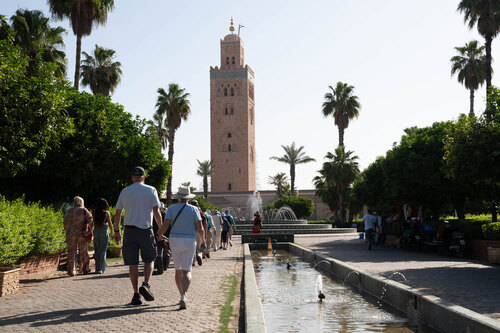
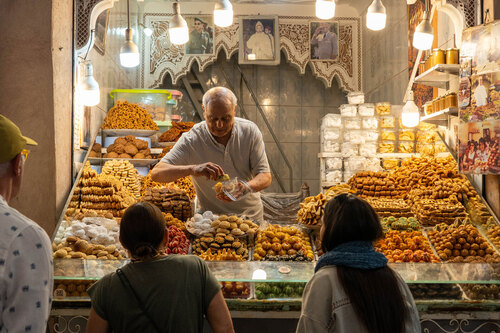
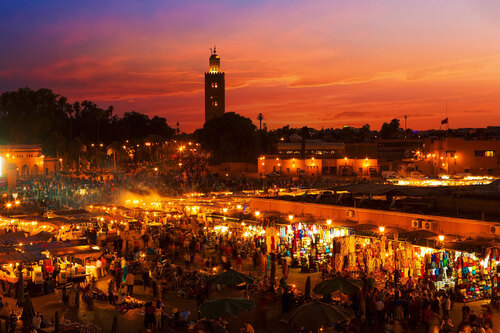
If you prefer to explore independently or wish to ‘return to town’ after our morning excursion, a complimentary shuttle will take you from the ship to the centre of Tangier. Enjoy time at your leisure to sip mint tea in a local café, browse traditional craft shops, or take in the atmosphere at your own pace, before we sail north to Portugal, in the late afternoon.
Set on the broad estuary of the Rio Arade, Portimão stands at the heart of the Algarve, a region forged on the frontier between Christian and Islamic worlds. For more than five centuries the Algarve formed the western edge of Moorish Iberia, its ports linking North Africa, the Mediterranean and the Atlantic. Castles, place names and whitewashed towns still bear witness to this period, while Portugal's Age of Discovery later transformed the region into a gateway for voyages beyond Europe. Portimão itself remained a flourishing fishing town until recent decades, renowned for its sardine fleets and canning industry. Today, the town fishes for a different catch, with a marina full of yachts and a lively waterfront lined with cafés, restaurants and bars.
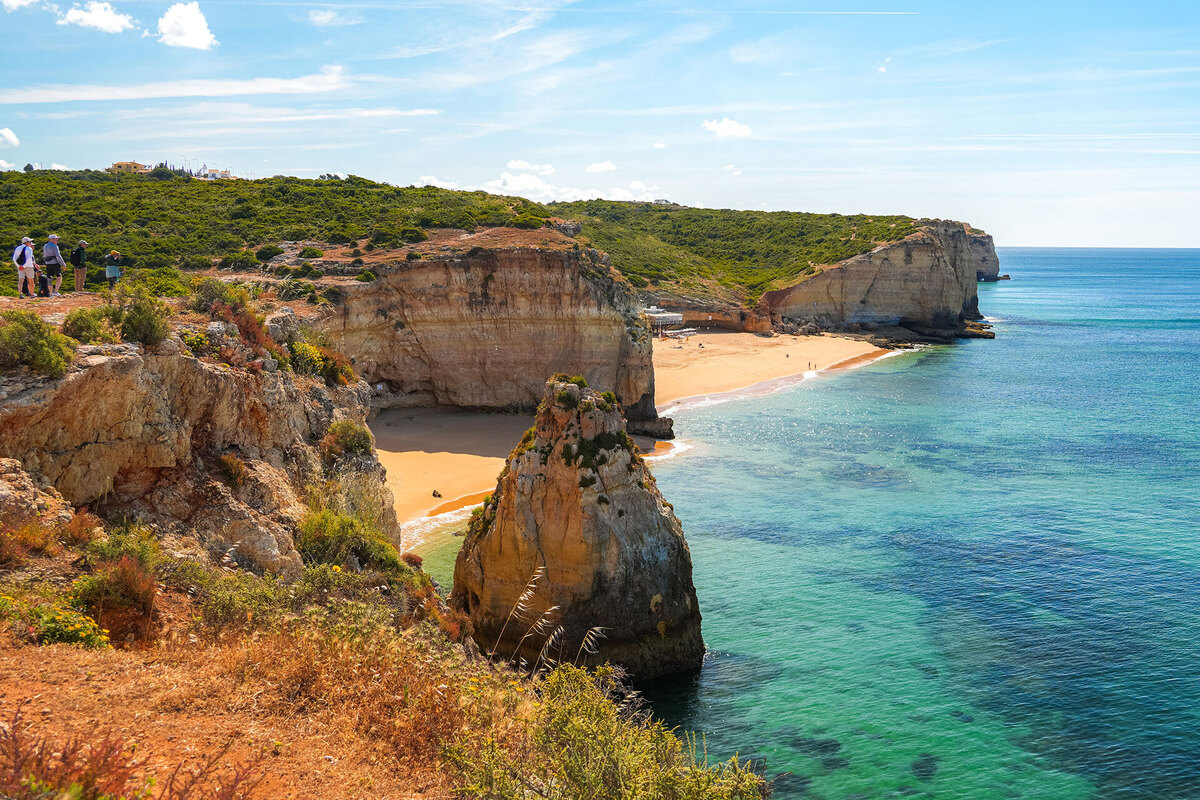
Choose between walking the full distance, or section of, the region's celebrated Caminho. The Algarve's coastline is defined by dramatic cliffs, hidden coves and weather-sculpted rock formations, shaped over millions of years by the combined forces of wind, sea and shifting earth. Winding along this rugged shore is the Caminho dos Promontórios—the Path of the Headlands—a clifftop trail linking a series of rocky promontories with a series of beaches and sheltered inlets
Both walks conclude in Ferragudo, widely regarded as one of the Algarve's most picturesque fishing villages. Here, colourful boats bob gently in the harbour while the waterfront cafés and shady squares invite a slower pace of life. Wander the cobbled lanes that wind between whitewashed cottages adorned with bougainvillea, pause to admire views across the Arade Estuary, and soak up the authentic character of a village that has retained its maritime roots.
Choose to return directly to the ship or linger awhile longer, enjoying lunch at a waterfront café, exploring the village's narrow streets and whitewashed houses, or simply soaking up the relaxed atmosphere. A shuttle service will operate throughout the afternoon for those wishing to spend additional time ashore before returning to the ship.
Personalise your exploration with our included ‘Your Choice’ experiences
Option 1 - Morning experience: Praia dos Caneiros to Ferragudo: 3–4 km (2–2.5 miles)
For those seeking a relaxed introduction to the Algarve's spectacular coastline, this shorter walk explores one of the most scenic sections of the Caminho dos Promontórios before concluding in the charming fishing village of Ferragudo. Beginning near the golden sands of Praia dos Caneiros, we'll follow clifftop paths overlooking hidden coves, sculpted rock formations and secluded beaches framed by the Atlantic. Along the way, we'll discover how wind, waves and time have shaped this dramatic coastline, while enjoying panoramic ocean views and glimpsing traces of the region's maritime past, including coastal watchpoints once used to guard against pirate raids.
This rewarding walk offers all the beauty of the Algarve's famous shoreline in a shorter, more leisurely outing, leaving plenty of time to enjoy Ferragudo at the journey's end.
Option 2 - Morning experience: Caminho dos Promontórios - Carvoeiro to Ferragudo 7km (4.3 miles)
A short transfer brings us to Carvoeiro, where we begin one of the Algarve's most rewarding coastal walks. Following the full length of the celebrated Caminho dos Promontórios (Trail of the Headlands), we'll journey through an ever-changing landscape of dramatic limestone cliffs, hidden beaches, sea caves and wave-sculpted promontories revealing a wilder, quieter side of Portugal's southern coast.
With the Atlantic stretching endlessly to the horizon, each headland opens onto a new perspective: secluded coves tucked beneath towering cliffs, offshore rock stacks at times alive with seabirds, and distant views along one of Europe's most famed shorelines. Along the route we'll encounter the sixteenth-century Torre da Lapa, a historic watchtower that once formed part of a coastal warning system protecting local communities from pirate incursions.
More than simply a coastal walk, this is an immersive exploration of the Algarve's geology, maritime history and natural beauty. For those willing to cover the extra distance, the full trail delivers a deeper appreciation of this remarkable landscape and some of the finest cliff-top scenery in Portugal.
After breakfast, disembark and board our group transfer to the airport for your onward flight. We strongly suggest your doesn’t depart prior to 1:00pm.
Meals: Breakfast