

Welcome to Vantage Explorations’ The Cross and the Crescent Moon
Shaped by centuries of conquest and coexistence the Canary Islands, Morocco, and Spain tell a fascinating tale.
From the Moorish conquest of Iberia to the Reconquista, and the ‘Age of Exploration’ to the tragic legacy of the slave trade, these regions have forged alliances and rivalries that influenced the world. Their legacy lives on in the architecture, music, and traditions that echo throughout these lands, with each destination revealing a new chapter of intrigue, ambition, and vibrant cultures that refuse to fade. From the volcanic beauty of the Canaries to the maze-like medinas of Morocco and the sun-drenched citadels of Spain, this voyage is a sensory feast.
Arrive at Gran Canaria Airport and transfer to our Embarkation Suite (conditions apply below). Explore Las Palmas at your leisure before returning to our Embarkation Suite at the designated times for the group transfer to Douglas Mawson.
Important information:
- Complimentary airport arrival transfers are provided as group transfers for expeditioners arriving at Gran Canaria Airport prior to 12:00pm on Day 1 only.
- Passengers who arrive after the airport transfer cut-off will need to make their own way to the Embarkation Suite before 2:00 pm to complete mandatory check-in.
- For passengers already in Las Palmas, we ask you to visit our centrally located Embarkation Suite with all luggage, which will be open for mandatory check-in between 9:00 am and 2:00 pm.
- Passengers have access to our centrally located Embarkation Suite, including luggage storage, Vantage Explorations staff for voyage and city information and cabin check-in, WIFI, tea, coffee and light refreshments. Embarkation Suite location: to be advised closer to date of departure.
- As your luggage will be transported to the ship at 2.30pm and ahead of you, please ensure you place any items you require during the day in your day bag, including passports, cash/cards and medicines.
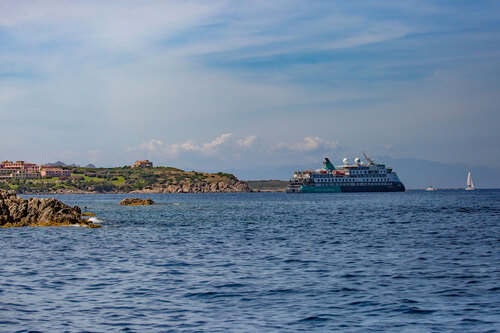
In the late afternoon join a mandatory group transfer to board the Douglas Mawson. After boarding, there’s time to settle into your cabin before our important safety briefings before we ‘throw the lines’ to begin our voyage.
This evening, join your fellow travellers for an onboard Welcome Dinner, where your expedition team will introduce you to the expedition ahead and raise a toast to the adventures to come.
Meals: Dinner onboard
The eight volcanic islands that make up the archipelago, of ‘the Canaries’ fall under European jurisdiction but are historically linked to their nearest neighbour; Africa. Today, the islands stand as a testament to resilience and cultural diversity, blending influences from Spanish settlers and indigenous Guanches.
We explore Lanzarote, the northernmost Canary Island, known as ‘Volcano Island,’ for its dramatic volcanic terrain. Lanzarote’s volcanic landscape includes expansive lava fields and uniquely shaped rocks set against a backdrop of black and red soil that vividly contrasts with traditional whitewashed houses.
This morning we have two ‘volcanic’ walking trails for you to choose from, with your afternoon free to explore Arrecife at your own pace with many sites less than a kilometre from the ship*. Perhaps choose between the city’s two historic fortress museums to gain insight into the island’s history and artistic heritage, including the museum at Castillo de San Gabriel, which traces Lanzarote’s story from its earliest settlers through pirate attacks and volcanic eruptions to its modern development. Alternatively, enjoy a relaxed stroll around Charco de San Ginés, a picturesque lagoon lined with whitewashed houses, fishing boats and cafés—one of the city’s most charming spots. (*dependent on pier allocation).
Personalise your exploration with our included ‘Your Choice’ experiences.
Option 1 – Morning experience: Timanfaya National Park
This morning our drive ascends the slopes of Lanzarote’s interior at Timanfaya National Park where a truly otherworldly experience awaits. From the National Parks touring vehicles, we view the park’s stark lava fields and striking craters, shaped by 18th- and 19th-century eruptions, creating a dramatic and surreal landscape, while its vibrant colours and unique formations offer a fascinating glimpse into Lanzarote’s volcanic history. At the Timanfaya Visitor's Centre, we see nature in action when our ranger performs geothermal demonstrations, showcasing the intense heat from beneath the Earth’s surface by igniting brushwood and triggering geysers. Note: Timanfaya National Park is an active volcanic region. Visitors should be aware of its potential risks. Entry is at your discretion.
Option 2 – Morning experience: Volcanoes Natural Park and Lanzarote's Volcanic Wine
Explore Lanzarote’s Volcanoes Natural Park on a trail that brings the island’s dramatic volcanic history to life. This 5 km (3-mile) walk follows gravel and sandy paths through a landscape forged by the powerful eruptions that reshaped Lanzarote, creating the vast lava fields that define the island today. The route leads to El Cuervo Volcano, where you can walk into the collapsed crater itself and experience one of the most striking remnants of the Timanfaya eruptions.
After our exploration of this extraordinary volcanic landscape, our reward is a visit to La Geria, Lanzarote’s renowned wine region. A short transfer brings us to this unique vineyard district, where you'll enjoy a tour and tasting of local wines, including Malvasía and Listán Negro. The volcanic soil and distinctive semicircular stone walls of La Geria protect the vines from the wind and help retain precious moisture, creating a truly remarkable landscape and ideal growing conditions for these distinctive wines.
This popular experience combines dramatic volcanic scenery, cultural discovery, and a well-earned taste of Lanzarote’s unique winemaking heritage.
Our voyage from Arrecife to the Moroccan coast offers an interesting interlude, during which our host, an onboard team, introduce you to the fascinating cultures and histories of the destinations ahead through engaging presentations.
A day at sea affords you the opportunity to explore the ship’s amenities. Whether you choose to invigorate yourself in the gym, relax in the library, or enjoy panoramic views from the observation lounge, there is something for everyone to enjoy.
This morning marks a change of pace as we bid farewell to the Douglas Mawson and journey inland on a three-hour and a half-hour drive to the vibrant city of Marrakech. Located at the foothills of the Atlas Mountains, Marrakech is an eclectic mix of centuries-old architectural styles. The fabled ochre city was founded over 1,000 years ago during the Almoravid dynasty and still beats an age-old rhythm. Famed for its outstanding artisanship, the city has boomed as one of Africa’s key hubs for contemporary art, architecture and design.
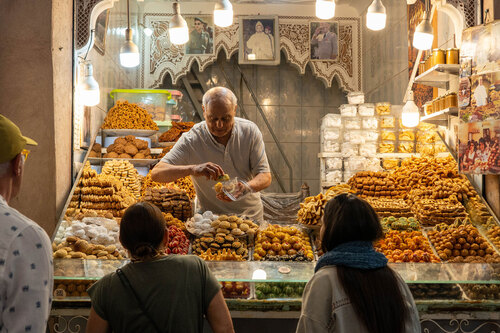
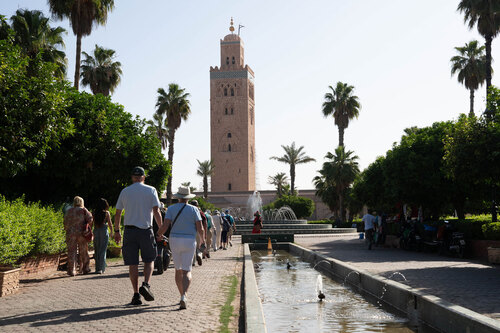
We arrive in time to enjoy lunch at a popular local restaurant, before visiting Marrakech's UNESCO World Heritage listed medina. The medina is a feast for the senses: fragrant spices fill the air, vibrant stalls spill over with colour, and the rhythm of daily life unfolds in every corner. Our locally guided walk includes an exterior viewing of the Almohad masterpiece, the Koutoubia Mosque, followed by an interior visit to the Ben Youssef Medersa, a beautifully restored 16th-century former Koranic school where we admire Morocco’s famed geometric zellij mosaics and intricately carved cedarwood. We delve deeper into the medina, walking through its maze of laneways and covered markets bursting with energy, before reaching our hotel.
We check in at our hotel before returning to ‘town’ to view Marrakech at night. No visit to Marrakech is complete without a visit to fabled Djemâa el Fna Square. We immerse ourselves in the captivating energy of this mythical square, one of the world’s great spectacles, where for centuries locals have gathered every evening to watch storytellers, magicians and performers, before enjoying a traditional feast at a local restaurant.
Accommodation: Marrakech Hotel
Meals: Breakfast (onboard), Lunch, Dinner
Your morning is free to simply stroll the streets of Marrakech or choose your own preferred experience in this fascinating city. Perhaps return to the medina this morning, visit Spice Square where everything from herbs, spices, snakeskins and chameleons have been sold for centuries, or spend time in the tranquil Marjorelle Gardens, where the city’s colourful palettes inspired much of Yves Saint Laurents creative work when he called Marrakech home.
In the early afternoon we transfer by road to Casablanca, where to reboard Douglas Mawson and set sail north to Tangier.
Meals: Breakfast, Dinner onboard (To maximise your time at leisure in Marrakech, lunch has been left at your own discretion today)
After a night sailing the Moroccan coast, we arrive at a city located at the crossroads of Africa and Europe — Tangier. Unique among Moroccan cities, Tangier has a chequered past, offering one of Europe’s most tantalising stories. Designated an ‘International Zone’ in the early 20th century, Tangier harboured no taxes, no banking restrictions, no drug, censorship or morality laws. Attracting a mix of expat residents, it played house to everyone from eccentric British nobility to American authors, Franco’s civil army to Nazi spies, while it awaited its inclusion in the post-war nation of Morocco. Stories of illicit affairs, underworld deals, and espionage abound in this city, which remains as colourful as its history suggests.
This morning we wind our way up to the Tangier Kasbah, a historic fortified district perched above the city, offering sweeping views over the Strait of Gibraltar. With its maze of narrow streets, traditional houses, and centuries-old walls, it provides a fascinating glimpse into Tangier’s strategic and cultural past. We then visit a truly ’one off’ site. The first American public property outside the United States, the American Legation is now a museum that traces the history of the relationship between the US and Morocco. As one of the first countries to recognise America's independence, Morocco permitted the new United States government to establish a legation in Tangier in 1821. It is the only historical monument to have remained in American possession since the birth of the American nation. Among several displays here is a letter from George Washington to the Sultan Moulay Abdellah.
For a more relaxed alternative, or for those wishing to ‘return to town’ this afternoon our complimentary shuttle will take you from the ship to the centre of old Tangier, where you can discover more of the city. Enjoy time at your leisure to sip mint tea in a local café or create your own ‘taste of Tangier’ as you wind through the medina past vibrant food stalls and artisan markets, pausing to sample traditional treats, before we sail north to Spain in the early evening.
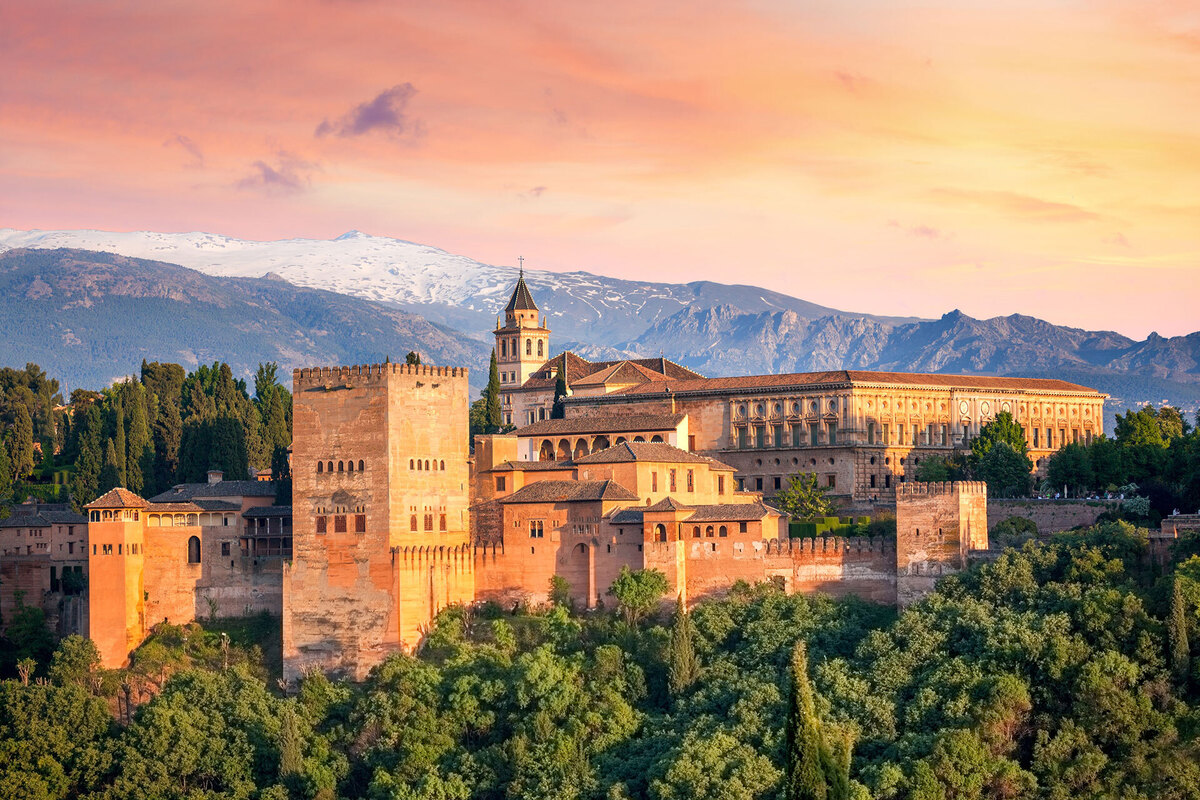
The port of Motril affords us access to two of Spain's unforgettable travel experiences within an hour's drive. Encounter the ultimate Iberian stronghold of Granada’s Alhambra where you’ll be immersed in seven centuries of Spanish history whilst walking amongst one of the greatest architectural achievements of the Moorish Empire.
Should you prefer to experience Andalusia’s stunning natural beauty with an exciting twist, don't turn down the opportunity to hike the famed Caminito del Rey.
Personalise your exploration with our included ‘Your Choice’ experiences.
Option 1 – Full-day experience: Moorish Granada
More than any former Moorish stronghold, Granada affords visitors an insight into the sophisticated society assembled by the Moors, and the determination of the Christian monarchy to establish their dominance by forcing them out of the Iberian Peninsula. Scattered throughout the city are monuments to the days when each empire ruled the peninsula, the wealth and power they wielded and the expansion of their influence worldwide.
Crested by the famed Alhambra, the city revels in the wake of its past. Unable to recreate Allah’s physical features due to their religious beliefs, the scholars and craftsmen of the Moorish Empire worked verses and poems of praise from the Qur’an into their art, architecture and gardens, the best examples of which are the wonders that are the Alhambra and the geometric gardens of the Generalife. Without the filigree masonry work of Alhambra, Spain would not be Spain. Exquisite handcrafted wooden calligraphy fills the arches, ceilings and corners of this former palace while intricately patterned ceramic tiles hint at religious fervor. Capped off by clever engineering disguised in the form of water features and fountains, Alhambra is a story unto itself. Even its 15th-century addition represents the conquest and reconquest of La Reconquista, with Charles V, who was considered at the time to be the most powerful man in the world, building his palace directly on top of the original ramparts.
Option 2 – Full-day experience: The Caminito del Rey
Strap on your walking shoes and don your hard hat for a hike like few others. The Caminito del Rey is a remarkable walkway built into the walls of the Gaitanes Gorge, with sections attached directly to the sheer rock face, at times barely one metre wide, stretching for around three kilometres through this dramatic landscape. Construction began in 1901, with the path originally built alongside railway tracks to connect both sides of the gorge, but in 1921, when King Alfonso XIII crossed the route to inaugurate the nearby Conde del Guadalhorce Dam it received its enduring name; ‘the King’s Little Path.’ Today, it has been fully restored to offer an unforgettable hike, combining striking natural beauty with a fascinating engineering heritage high above the river below.
The naval city of Cartagena has remained on Europe’s radar for centuries. Fought over by Carthage and Rome, its nearby silver mines gifted it wealth and a natural harbour etched its name into history as a port of importance. Standing on the sprawling battlements of the hilltop castle you can all but see layer upon layer of history spread beneath you. The wharf – once home to Phoenician traders. The city streets - once marched by Roman legionaries. The plaza – once a mosque where Islamic Spain prayed to Allah. The surrounding hills – once a stronghold for armies of the Christian Reconquista who arrived enforce.
Our locally guided walking tour takes us directly from the ship through 2,500 years of history as we discover first-hand the city’s significant landmarks. We visit the restored Roman Theatre built between 5 and 1 BCE which, in 3CE, crumbled with its empire and has been remarkably restored and the neighbouring remains of the city’s Roman Amphitheatre once home to Spain's gladiatorial spectacles. Our walk continues in 20th and 21st century Cartagena offering a glimpse of imperial grandeur with its striking City Hall and a walking friendly pedestrianised city centre full of cafes and modernist architecture.
After our guided tour, choose to return to the ship, or perhaps head straight for Mercado de Santa Florentina, Cartagena’s authentic 20th century covered market hall where stalls sell popular local produce ever morning, or walk the halls of Cartegana’s National Museum of Underwater Archaeology, or ARQVA, which display treasure gathered over 50 years from wrecks found along the nearby coastline, including 4 tonnes of treasure salvaged from the 19th century Spanish frigate Nuestra Senora de las Mercedes, which caused an international feud with over 500,000 silver and gold coins discovered on the wreck.
In a country celebrated for its rich culinary traditions, no voyage would be complete without a day devoted to the food and wines that have shaped Spain's culture.
Choose to explore Alicante's iconic Central Market and atmospheric tapas bars, uncover the story of Spain's historic "white gold" at the flamingo-filled lagoons of Santa Pola or venture into the sun-drenched Vinalopó Valley to sample the wines of one of Spain's oldest wine-producing regions. With your afternoon free to explore independently you may wish to walk off some calories by scaling Mount Benacantil to Santa Barbara Castle or wandering the archaeological dig of the ancient Roman city of Lucentum.
Personalise your exploration with our included ‘Your Choice’ experiences.
Option 1 – Morning experience: A Wine Fit for the Romans
Set amid the sun-drenched landscapes of the Vinalopó Valley, Alicante's wine region is among the oldest in Spain. Viticulture here has roots stretching back more than two millennia, with the Romans helping to expand vineyard cultivation and establish wine as an important part of local agriculture and trade. Over the centuries, generations of growers built upon these foundations, creating a distinctive wine culture shaped by the Mediterranean climate and fertile inland valleys.
During our visit to a local winery, we will learn about the traditions, techniques and landscapes that have defined winemaking in this region for centuries. Typical wines of Alicante include robust reds made from Monastrell, aromatic whites crafted from Moscatel, and the celebrated Fondillón, a rare style of aged wine with a long and distinguished history.
Our visit concludes with a tasting, offering the opportunity to sample a selection of regional wines while gaining a deeper appreciation of one of Spain's most historic and characterful wine-producing areas.
Option 2 – Morning experience: A Taste of Alicante
Discover the flavours of Alicante alongside a local guide at the iconic Mercado Central, an early twentieth-century market that has been at the heart of city life for more than a century. Housed within a striking Modernist building crowned by a soaring dome and bathed in natural light, the market is as much an architectural landmark as it is a temple of gastronomy. For generations of Alicantinos, a visit here has been a daily ritual, with shoppers gathering among its bustling stalls in search of the freshest seasonal produce.
As we explore the market's colourful aisles, we will discover how many of Alicante's most beloved dishes begin with the ingredients displayed before us. Our guide will introduce the seafood used in the region's celebrated rice dishes, explain the role of local olive oils, saffron and spices, and highlight the cured meats, cheeses and traditional products that have long been staples of Mediterranean kitchens.
Following our visit, we make our way to El Barrio, Alicante's atmospheric old quarter, where narrow lanes and colourful façades reflect the easy-going Mediterranean spirit of the city. And what better way to celebrate Alicante's culinary traditions than with a tapas lunch hosted by our local guide? Accompanied by regional wines, these small but flavourful dishes provide an authentic taste of Spain and a fitting conclusion to our exploration of Alicante's rich gastronomic heritage. Choose to linger longer independently or return to the ship for a well-deserved after lunch snooze.
Option 3 – Morning experience: Pink Gold
Just 20 minutes from Alicante lies a landscape that helped shape the course of history. If an army marches on its stomach, then the Romans marched on salt. Long before refrigeration, this humble mineral preserved food, sustained armies, powered trade and made long-distance exploration possible. So valuable was salt that it was once considered worth its weight in gold.
Today, the Santa Pola Salt Flats tell the story of this remarkable commodity. For centuries, seawater has been channelled into a network of shallow lagoons, where the Mediterranean sun and coastal winds slowly transform it into gleaming salt crystals, harvested much as they have been for generations.
Yet salt is only part of the story. The lagoons and salt pans have created one of Spain's most important wetland habitats, attracting thousands of birds each year. Most celebrated are the elegant pink flamingos that gather in the shallow waters to feed, often providing spectacular viewing opportunities.
Join us to discover a landscape where history, industry and nature intertwine. Once prized enough to provision empires and drive global trade, salt now shares the stage with shimmering lagoons, abundant birdlife and one of the Mediterranean's most extraordinary coastal environments
Reaching the sun-drenched city of Valencia, we hear tales of the city’s Islamic legacy which extends beyond its architectural wonders, while remaining entrenched in the soul of the city and its inhabitants. It is reflected in how Valencians live; in the jargon they use and in place names scattered throughout the region. The city’s story is one of conquest upon conquest. The home of the mythical El Cid, Valencia was a Moorish town having capitulated without bloodshed, but with the arrival of the Christian armies, its story changed, and it was heavily involved in La Reconquista.
Renowned for its abundant sunshine, iconic oranges, and Spain's favourite dish, paella, Valencia offers a choice of two experiences this morning. If you’re a foodie fan or simply relish the vibrant atmosphere of Spanish markets, those joining our walking tour will end their journey at the Mercado Central. Considered one of Europe’s largest fresh food markets, the eclectic food stalls here, open until mid-afternoon, sell everything from sumptuous smoked hams to seafood, pickles olives to perfumes and of course, a vast range of Spanish wines and aperitifs.
Personalise your exploration with our included ‘Your Choice’ experiences.
Option 1 – Morning experience: The Story of Valencia
Join a locally guided walking tour of central Valencia to explore the city’s eclectic history, with an emphasis on the 500 years of Islamic rule, and La Reconquista – the infamous period in history which ended it all. We stroll the Turia Gardens before stepping back in time through Portal de Valldigna, the historic boundary between the Christian city and Moorish quarter. It was here that Islamic textiles forged the foundation of a prosperous trade, which became the cornerstone of the Christian city in the 15th century. We visit La Lonja de la Seda de Valencia (The Silk Exchange), which boasts UNESCO World Heritage status where we hear tales of the power and wealth of Valencia’s Christian merchants whose wealth funded the city’s most famous landmark – the Valencia Cathedral. Leaving the narrow alleys of El Carmena for the Plaza de la Virgen and Plaza de la Reina, we find the city's famed cathedral. Filled with treasures, it houses a chalice believed to be the Holy Grail and tells a tale of the wealth the church afforded the city. Our walk ends with a true treat, the Mercado Central – Valencia’s favourite foodie destination, where generations of providores sell their wares at stacked-high stalls and the city comes together to honour its culinary traditions.
Option 2 – Half day experience: Hiking Valencia’s Roman Hinterland
Walking the Peña Cortada Aqueduct is a rare experience, a hike where every step carries you back to the height of Roman power, when its rule stretched across Europe. Over a 6–8 km route taking around three hours, you don’t simply observe history; you walk it. An hour’s drive into the Valencia hinterland brings you to a trail that follows the very channel carved by Roman engineers nearly two millennia ago. You pass through tunnels cut into solid rock, traverse a gorge with dramatic scenery and cross the aqueduct itself, where water once flowed. Few places on earth offer such intimacy with ancient infrastructure — a true journey back in time, and a uniquely unforgettable one. Note: this hike is subject to local conditions and may take longer than the time listed.
After breakfast onboard, disembark and join our group transfer to the airport for your onward flight.
Note: We strongly suggest that your flight does not depart prior to 1:00pm
Meals: Breakfast