

Welcome to Vantage Explorations’ South Georgia & Antarctica: Through the Lens Fly/Sail photography expedition.
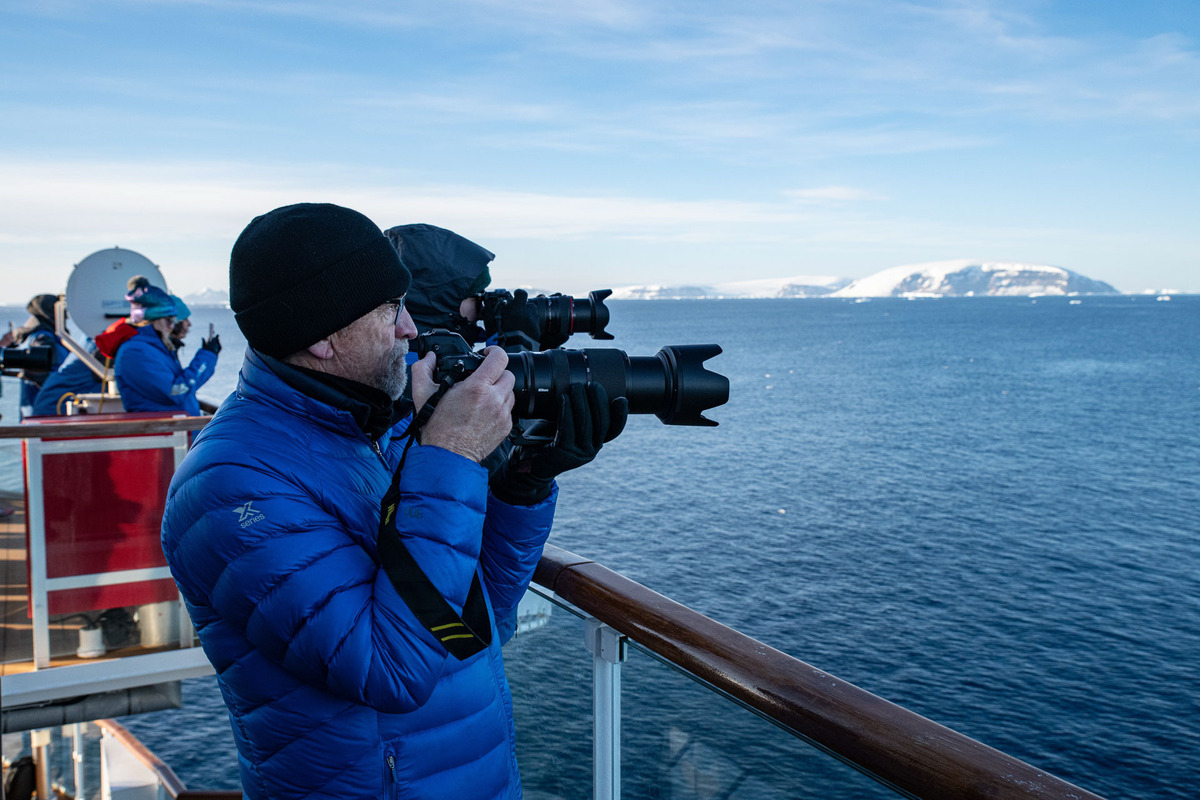
This photography expedition is a journey into an environment shaped by time, ice, and the relentless forces of nature. Light behaves differently here, painting surreal pastels across the sky at the fading of the southern summer. Wildlife is unafraid and often curious, offering intimate photographic encounters rarely possible elsewhere. This photography-focused voyage is an exceptional opportunity for all photographers, regardless of experience, to capture some of the wildest and most pristine locations in the world with expert guidance. From the dramatic peaks of South Georgia to the cathedral-like silence of Antarctica’s frozen wilderness, each day offers new compositions, new light, and new stories to tell through the lens.
Arrive in Punta Arenas, where you will be met by a representative of Vantage Explorations and transferred to our hotel. We ask that you arrive no later than 2:00pm on this day. In addition to ensuring your arrival in time for our important pre-flight briefings, if weather conditions deem it necessary, we may depart for King George Island on Day 1 as opposed to Day 2.
Please visit the Vantage Explorations hospitality desk in the lobby between 2.00 pm – 6.00 pm to collect your luggage cabin tags. Our team will confirm details regarding your embarkation day, answer any questions and provide you with information about where to dine or purchase last minute items.
Overlooking the Straits of Magellan, the city sits astride one of the world's most historic trade routes. Today, Punta Arenas reflects a great blend of cultural backgrounds, from English sheep ranchers to Portuguese sailors. It remains an utterly fascinating testament to Chile's rich history. Modern day Punta Arenas is home to many popular restaurants, and bars, offering a mix of local and international fare (meals at your own expense today).
This evening, meet your fellow expeditioners at a voyage briefing where we will reconfirm your transfer times for tomorrow, explain the procedures for your flight to King George Island and outline important IAATO regulations for visitors to Antarctica.
This morning, we will be transferred to Punta Arenas airport for our charter flight to King George Island, Antarctica (weather permitting). The flight will take approximately one hour and forty-five minutes. On arrival into King George Island our expedition team is on hand to greet you and to prepare you for your Zodiac transfer to the vessel. You will have time to settle into your cabin before our important safety briefings.
Note: Luggage restrictions apply to our charter flight, 1 x checked piece (<23kg) + 1 x carry-on piece (<8kg). The overhead bins of a BAE146 are substantially smaller than those on a regular commercial flight. Dimensions are Height: 45 cm / Width: 40 cm / Depth: 20 cm
If your camera gear combined with your usual luggage means you may go over these weight limits, please let your reservations consultant know. As we have chartered the plane, we have some flexibility with the weight. If you would like to bring your camera gear on board with you, please take note of the overhead bin dimensions above, otherwise it will need to be placed under the seat in front of you or checked in. It is important to note that your checked luggage will be taken from the plane directly to the ship, and you will not have access to your checked luggage until it is brought to your cabin.
Note: King George Island is located at the northern part of the Antarctic Peninsula in the South Shetland Islands and is one of the most remote places on Earth. A clear sky with perfect visibility is required for safe take-off and landing. A contingency plan will be applied to your itinerary should your flights not proceed today. Your safety is our utmost priority. We apologise in advance for any delays caused due to this unpredictable situation. Please refer to our terms and conditions for a more detailed explanation.
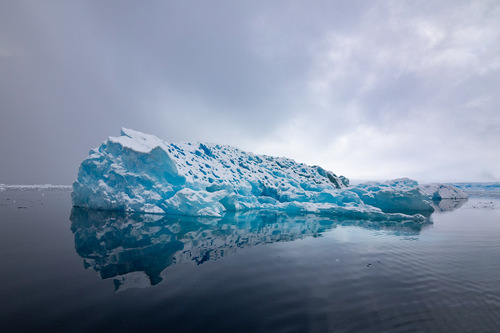
It’s almost impossible to describe the feeling of arriving in Antarctica. Spotting your first iceberg and taking a deep breath of some of the most fresh, crisp air on earth is an experience that will stay with you forever.
Your experienced expedition team, who have made countless journeys to this area, in partnership with our team of photography experts, will use their expertise to design your voyage from day to day, getting you in the best position based on the prevailing weather, ice conditions and wildlife opportunities. Flexibility is key on an Antarctic expedition, especially a photography expedition. Rest assured that if a wildlife event presents itself, or the light hits a glacier just right, the team will do what they can allow you more time to capture it, provided it is possible and safe to do so, of course!
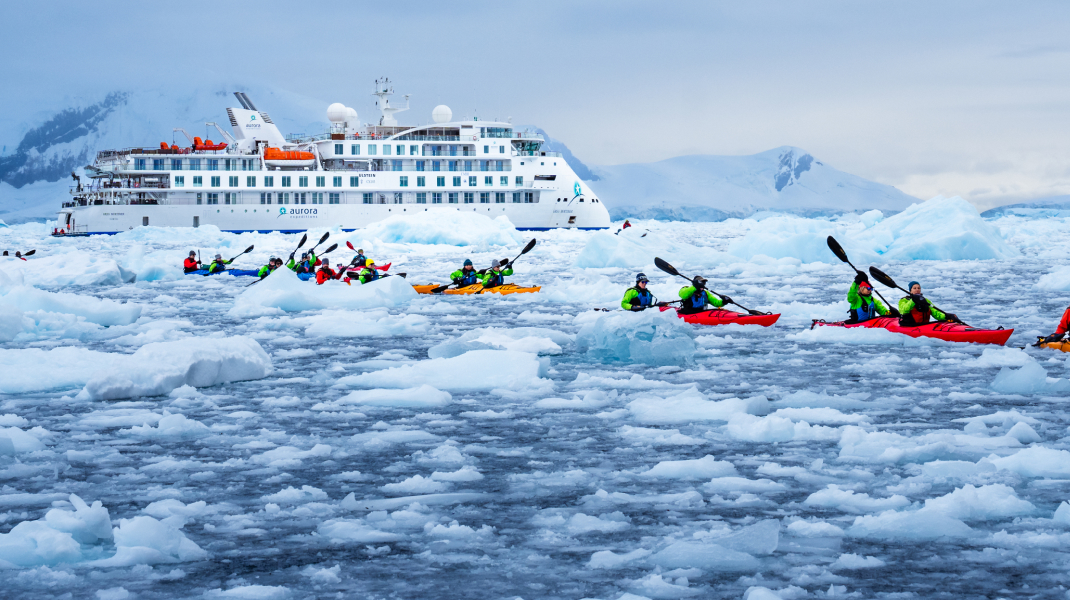
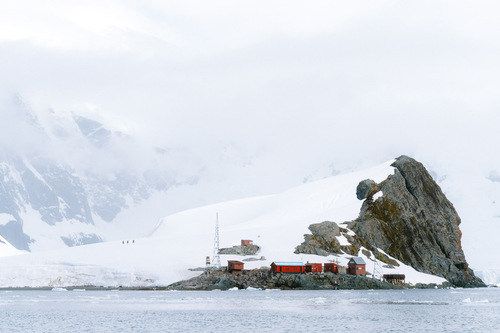
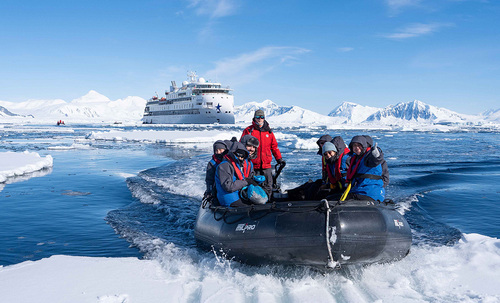
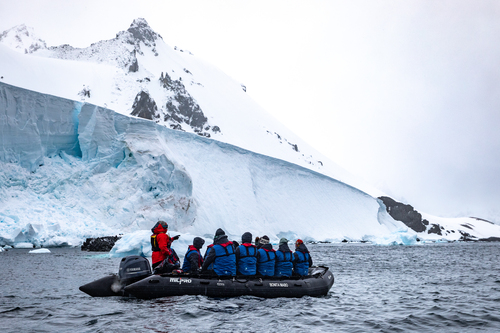
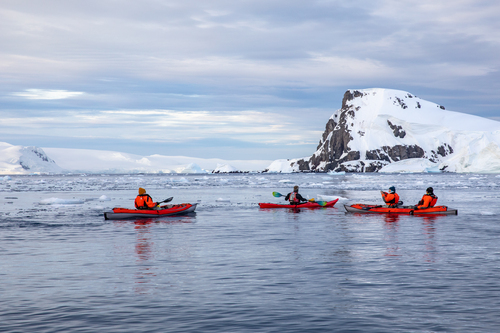
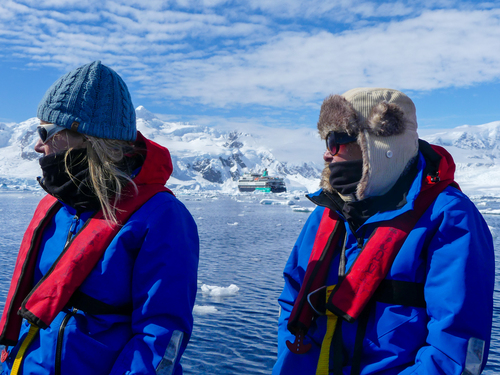
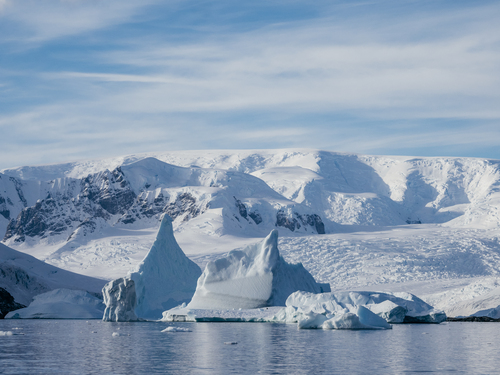
Once we arrive, the Antarctic Peninsula and the South Shetland Islands are ours to explore, and we have a host of choices available to us. We generally make landings or Zodiac excursions twice a day, and the timings of these will depend on what the day brings us. You will want to rug up before joining Zodiac cruises along spectacular ice cliffs or among grounded icebergs, keeping watch for whales, seals and porpoising penguins. We have been known to have longer Zodiac excursions than originally planned... sometimes we are just presented with a special moment that cannot be missed. One can never know what wonders Mother Nature will serve up! And that is all part of the beauty and the fun of an expedition to the Antarctic. Keep an ear out for the creak and deep rumble of glaciers as they carve their way from summit to sea. With the engine turned off, take a quiet moment to experience the wonder of this incredible white continent.
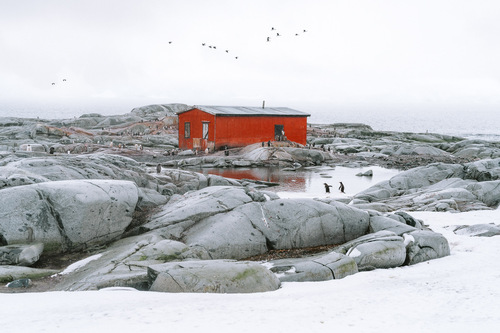
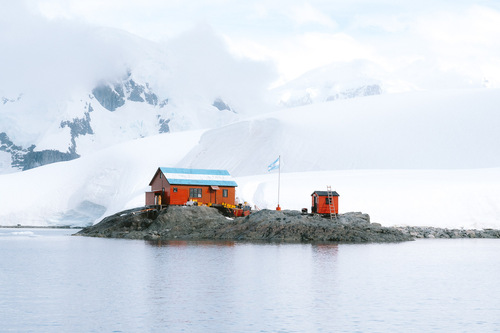
The Zodiac excursions are a major part of the expedition and on this voyage, we have reduced the passenger numbers on the voyage and in the Zodiacs. This will allow our photographers to manoeuvre around the Zodiacs to capture their subject matter with ease, as well as allow sufficient room for their gear. Zodiacs will also transport you from the ship to land, where you can visit penguin rookeries, discover historic huts and explore some of our favourite spots along the peninsula.
While ashore, our expeditioners will be given a choice of how they would like to explore that site. Quite often, one of the options will be to hike up to a vantage point with mountains towering overhead and ice-speckled oceans below. The light can vary dramatically, depending on the weather on the day, but the view from the ridgeline never disappoints. We are travelling in the late summer, which is perfect for capturing the beauty of an Antarctic sunset. We plan to have some sunset excursions to take in the pastel-painted sky.
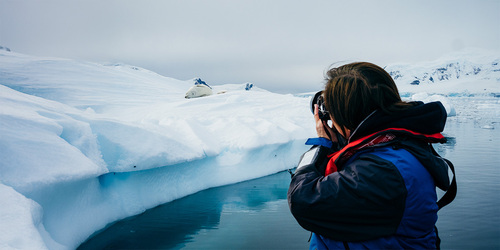
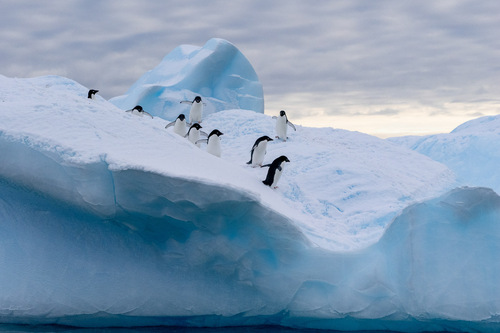
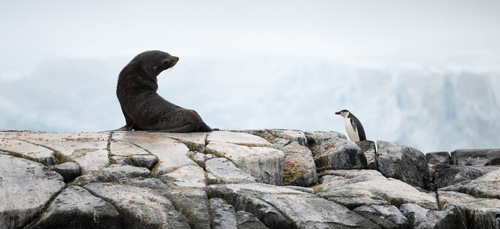
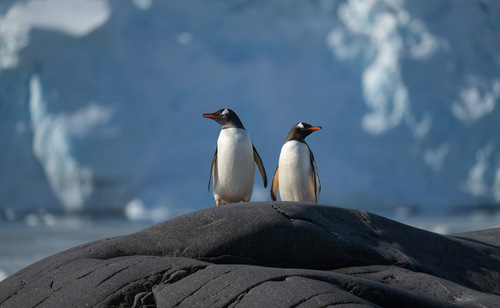
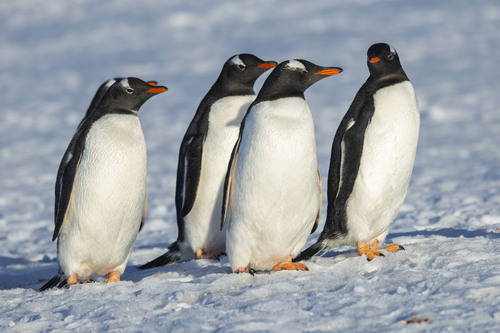
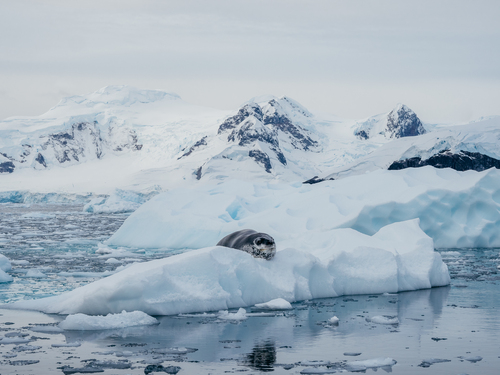
If your focus is on the wildlife, you may choose to wander along pebbly beaches where you are likely to find a variety of penguins (in this area, mainly gentoo), seals, and birds. Occasionally you may capture a leopard seal coming close to shore to find a snack. Whichever option you choose, our team will be with you every step of the way.
In addition to Zodiac cruises and shore excursions, we may ship cruise some of the narrow, dramatic straits separating offshore islands from the mainland, or linger in scenic bays to watch whales travelling or feeding.
This is a great time to enjoy the library or the Observation Lounge, featuring huge windows and superb views. The bridge will be opened at the Captain’s discretion, which will give our photographers a different perspective of the running of an expedition through these waters. Of course, we will also offer the tradition of the polar plunge, where those who dare to will have the chance to fully immerse themselves in polar waters - conditions permitting!
When we aren’t exploring by foot or Zodiac, we encourage all expeditioners to join as many lectures and workshops as they can. We will offer a variety of photography-focused workshops but also offer lectures from our expedition team of naturalists, historians, marine biologists, etc as well.
Note: The scheduler, where Antarctic operators book their dates and sites, opens closer to departure. Once our sites are booked, we will be able to provide more information on places we are likely to visit on this voyage. Keeping in mind that this is an expedition and there is always an element of flexibility.
Remote and inaccessible, entry into the Weddell Sea is highly prized among polar adventurers. Your passage begins at the northernmost extreme of the Antarctic Peninsula, in the beautifully barren Antarctic Sound. In this seldom-visited part of the Peninsula volcanic peaks tower above penguin colonies, and wave-sculpted icebergs parade through the deep channels leading to the Weddell Sea.
Continuing further east, embrace the expedition spirit as you forge your way as far as possible into the Weddell Sea. The Weddell Sea is renowned for its breathtaking tabular icebergs and expansive sea ice, which attracts an abundance of wildlife, including crabeater seals, Weddell seals and an array of seabirds. Take some time out on deck to observe the flight of storm petrels, prions and Antarctic cormorants drawn here by the rich blooms of Antarctic krill that flourish in the shelter of this ice-covered sea.
As you travel, take a moment to reflect on the truly historic seas you’re sailing. It wasn’t so far from here that the wreck of Ernest Shackleton's Endurance was discovered, mostly intact, on March 5, 2022. Researchers aboard the polar research vessel S.A. Agulhas II were astonished to find the well-preserved vessel only 6.4km (4 miles) south of the position calculated by Captain Worsley in 1915, when he last laid eyes on his ship.
Today we set a course for Elephant Island, the lonely outpost where 22 of Shackleton’s men survived several winter months under the shelter of two upturned boats. Perhaps there will be a presentation today on the awe-inspiring story of Shackleton and his men, who spent 9 months stuck in Weddell Sea pack ice and 6 months camping on drifting sea ice before making a desperate escape from the sea ice in three open boats. They spent almost a week battling the wind, currents, swell and treacherous ice to finally make landfall on Elephant Island, a striking, ice-covered extremity of the South Shetland Islands, after 497 days at sea.
Today we set a course for Elephant Island, the lonely outpost where 22 of Shackleton’s men survived several winter months under the shelter of two upturned boats. Perhaps there will be a presentation today on the awe-inspiring story of Shackleton and his men, who spent 9 months stuck in Weddell Sea pack ice and 6 months camping on drifting sea ice before making a desperate escape from the sea ice in three open boats. They spent almost a week battling the wind, currents, swell and treacherous ice to finally make landfall on Elephant Island, a striking, ice-covered extremity of the South Shetland Islands, after 497 days at sea.
After an exciting program of excursions and activities in Antarctica, relax and enjoy the slower pace of sea days as you sail towards South Georgia.
As you make your way across the Scotia Sea you’re following the route taken by Shackleton and five of his men when they sailed from Elephant Island in search of rescue. In their open wooden boat, the James Caird, they spent 17 days sailing into the unknown across this perilous patch of ocean. This boat journey, which concluded with their safe arrival in King Haakon Bay on the west coast of South Georgia, remains one of the greatest stories of maritime navigation and survival in polar history.
As you sail the onboard lecture program continues, with a series of entertaining presentations on South Georgia’s wildlife, geology and history in the lecture room. Or you might prefer to simply unwind: take a long lunch, catch up on your gym sessions, or curl up with a book from our polar library.
The Scotia Sea is known for its abundant wildlife including fin, humpback and blue whales. Keep watch for these gentle giants and elusive orca, which patrol these waters. Venture out on deck with your camera to capture cape petrels and prions wheeling, and albatross soaring gracefully amidst the swell.
As you near the rugged island of South Georgia, spare a thought for Captain James Cook, who arrived here in 1775 and believed it to be the northern tip of a great southern continent! In fact, it is a small island only 176 km (110 mi) long, but with a 3,000 m (9,842 ft) snow-capped mountain range, some of the world’s largest congregations of wildlife and a truly fascinating human history, South Georgia is an island of incredible riches.
As you approach, jagged mountain peaks rise steeply, while seabirds are often spotted soaring around the ship. You will sail along the coast, taking in the spectacular glaciated scenery and enjoying a little shelter from the prevailing westerly winds. This enchanting coastline is yours to explore!
Zodiac cruise around craggy coves and along the rocky coastline in search of penguins, seal haul-outs and bird cliffs. Remember to keep an eye out for South Georgia’s kelp forests—these remarkable underwater ecosystems are quite mesmerising as their fronds sway back and forth on the water’s surface.
Zodiacs will also shuttle you from ship to shore, where you can visit some of the largest king penguin colonies on Earth, take a guided walk among fur seals and elephant seals (making sure you listen to your guides and keep your distance!) and wander along pebbled streams and grassy glacial outwash plains. We also hope to visit the remnants of South Georgia’s thriving whaling stations and visit the final resting place of Sir Ernest Shackleton, whose incredible voyage of survival is synonymous with this island.
In addition to Zodiac cruises and shore excursions, we may ship-cruise through fjords with towering cliffs of ancient stone, or into deeply indented bays towards dramatic glacier fronts. This is a great time to find a comfy spot in the observation lounge to enjoy uninterrupted views of South Georgia’s majestic coast.
For some intrepid Shackleton fans, the optional hike from Fortuna Bay to Stromness will be a highlight. This route follows the final stage of Shackleton, Worsely and Crean’s improbable traverse of South Georgia, from their landing place in King Haakon Bay on the east coast to Stromness in the west, where they finally found safety after 24 harrowing months at sea.
From Fortuna Bay the trail rises to a spectacular alpine plateau, before angling steeply down towards the abandoned Stromness whaling station. Conditions permitting, we aim to repeat this final section of their traverse.
“Bright moonlight showed us that the interior was tremendously broken,” Shackleton wrote. “High peaks, impassable cliffs, steep snow- slopes, and sharply descending glaciers could be seen in all directions.”
As we sail from South Georgia, you will be enthralled by the ceaseless flight of the many seabirds that follow the vessel, skilfully using the air currents created by the ship to gain momentum.
If time and weather conditions permit, we could pass close to Shag Rocks, a fascinating group of jagged rocky islets protruding from the sea, in the proximity of South Georgia.
As we sail on towards Ushuaia you may choose to spend your final precious moments at sea soaking up the views on deck, enjoying the onboard facilities, or attending final lectures. There is plenty of time to enjoy the magic of the Southern Ocean, have a drink with newfound friends and reflect on the voyage you’ve shared.
On the final night, celebrate your unforgettable voyage with newfound friends at a special Captain’s farewell dinner.
We hope you will become ambassadors for the Antarctic region, telling your family, friends and colleagues about your journey to this magical place, and advocating for its conservation so that they might one day visit the region to experience what you have been lucky to see and do here.
During the early morning, we cruise up the Beagle Channel, before quietly slipping into dock in Ushuaia, where we will be free to disembark around 8.00 am. Farewell your expedition team and fellow passengers as we all continue our onward journeys, hopefully with a newfound sense of the immense power of nature.
Upon disembarkation, for those continuing their travels in the region, transportation to the hotel will be arranged exclusively for guests who have booked their accommodations through Aurora or for those staying in downtown areas near the port. Expeditioners departing on flights prior to 14.30 pm will be directly transferred to Ushuaia Airport, those with flights after 14.30 pm will have the opportunity to explore Ushuaia before an afternoon airport transfer, and the transfer procedures and details will be communicated onboard before disembarkation.
Note: At the conclusion of the voyage, we do not recommend booking flights departing Ushuaia prior to 12.00 pm on the day of disembarkation in case there are delays.